Sunday, August 30, 2009
Lessons From 1986 Tax Reform
Saturday, August 29, 2009
Political Affiliation and Health Reform

- 78 percent of conservatives opposed the reform plan.
- 73 percent said that they would still oppose it even if the controversial public option was removed
- By contrast, liberal support for the plan sans public option dropped by a third
- A majority of unaffiliated voters are opposed to passing health care reform legislation with or without (regard to) the public option.
Thursday, August 27, 2009
'They Are Not Evil' -He’s (Just) Embarrassed
- deny requests for expensive procedures
- seizing upon a technicality to cancel the policy of someone
- raise premiums for a small business astronomically after an employee is found to have an illness that will be very expensive to treat
Tuesday, August 25, 2009
Public Option - Employers Dump Benefits?
Monday, August 24, 2009
H. R. 3459 - Comprehensive Med Mal Reform
HR 3459 IH
Mr. BAIRD introduced the following bill; which was referred to the Committee on Energy and Commerce, and in addition to the Committee on the Judiciary, for a period to be subsequently determined by the Speaker, in each case for consideration of such provisions as fall within the jurisdiction of the committee concerned
Saturday, August 22, 2009
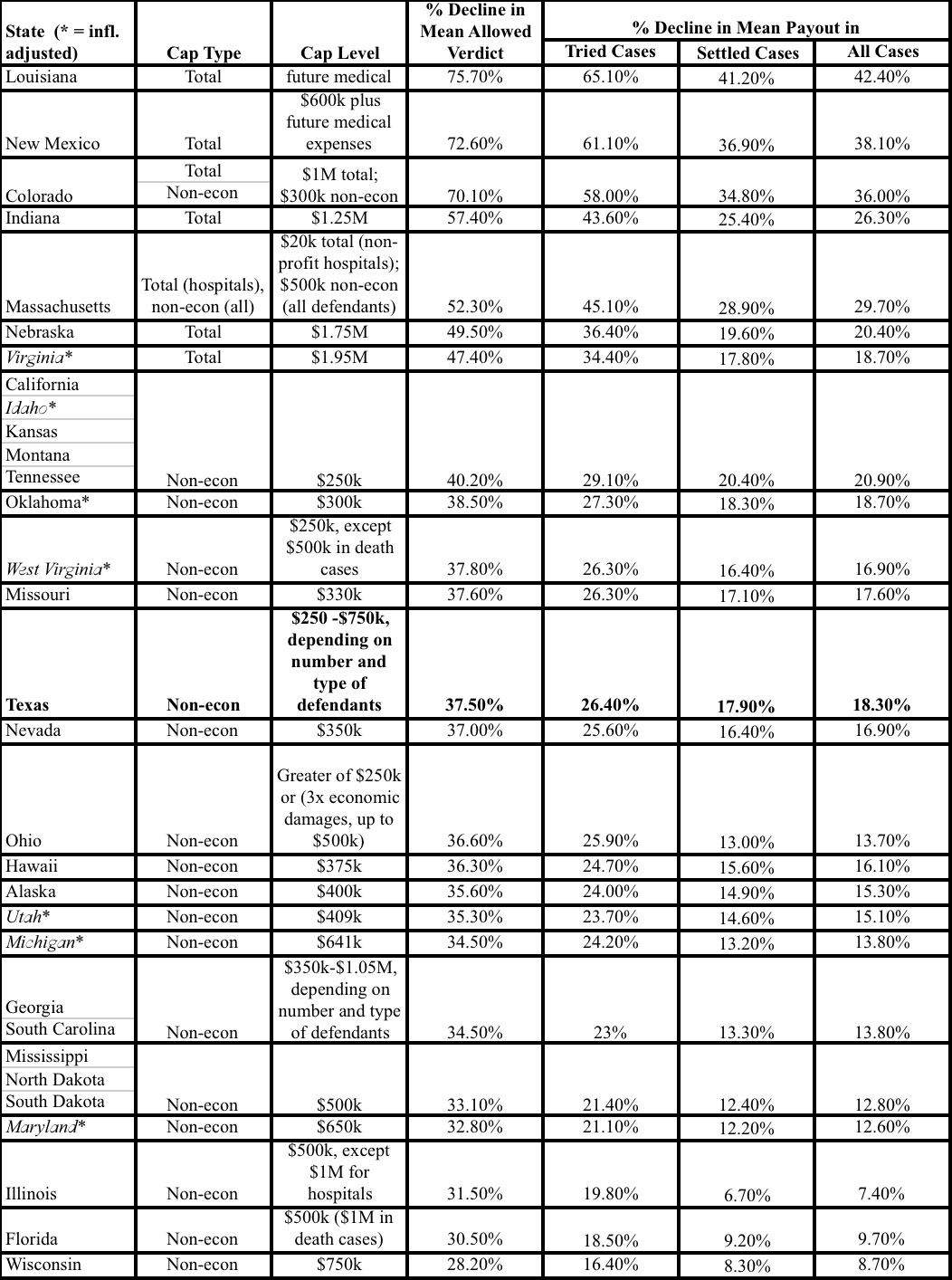
Texas Liability Reforms
- protected the patient,
- shielded doctors and hospitals from unscrupulous trial lawyers eager to make a quick buck at the system's expense.
- capped non-economic damages at $250,000 per defendant, or up to $750,000 per incident,
- no cap on more easily determined economic damages, such as lost wages or cost of medical care due to injury.
- ended the practice of allowing baseless, but expensive, lawsuits to drag on indefinitely, requiring plaintiffs to provide expert witness reports to support their claims within four months of filing suit or drop the case.
And what about the money that used to go to defending all those frivolous lawsuits? You can find it in budgets for upgraded equipment, expanded emergency rooms, patient safety programs and improved primary and charity care.
Friday, August 21, 2009
'PBM Premium' - The Broken Drug Payment System
(PBMs are middlemen who are unregulated by federal or state law. They are neither insurers nor providers of services)
(This is) costing employers, unions, the government and patients billions of dollars in higher insurance premiums. Quantifying exactly how high this "PBM premium" is can be difficult.
Thursday, August 20, 2009
Managed Care, the Only Survivor?
This is a horrid view of the future which we as physicians must attenuate even at some cost to ourselves. You can't just sit there and say to heck with reform, as physician disinterest in a plausible solution will be tantamount to a death warrant to a great portion of the population.
As we can see here, the American worker has received only a one percent increase in wages over this time period, effectively paying for the rise in his or her health care costs. This also demonstrates the ease with which the managed care company will be able to weather the storm.

-Bob
Wednesday, August 19, 2009
Democratic Support for Tort Reform?
Tuesday, August 18, 2009
Employer Mandates
Our country already functions largely upon employer provided healthcare. About 60% of Americans receive their healthcare through their employers. When combined with those covered under Medicare and Medicaid, we find that 15% of Americans remain uninsured in the current system. Who are these people? As Medicaid covers the unemployed, most of the uninsured are either at small businesses that cannot afford to provide health coverage for their employees, or they are freelance workers who either choose to go without health coverage or cannot afford the premiums. This number is growing in the economic downturn as more employers drop coverage when the cost becomes untenable.
Looking at other countries can allow us to determine what to do about this 15%. Most of Europe, Japan, Israel, and a host of other countries have utilized employer mandates to cover every citizen. Under these systems, every employer is required to provide healthcare for all workers. Small businesses receive assistance from the government to ensure their ability to pay for health coverage. Freelance workers enroll in insurance pools that greatly reduce the cost of health insurance. Most of these countries require that all citizens carry some type of health insurance either through their employer, through the freelance clearinghouse, or under the government's indigent program (much like Medicaid). To ensure that insurers treat consumers fairly, most of these countries also develop the "benefits basket" which are mandatory services that all insurers must provide. To compete in the marketplace, many insurers will provide additional services not included in the "basket."
So, why can't we do this in America? The simple answer is - we can. In the 90s, the Clinton healthcare plan actually approximated an employer mandate system, but was so complex and unwieldy and designed without stakeholder influence, so it was easily decimated by industries that would have suffered under it (e.g. health insurers who would face greater market competition that would cut into profits). According to a recent survey conducted by the Employee Benefits Research Institute (EBRI), 3 out of 4 Americans support an employer mandate for health care coverage. Clearly there is much interest in such a system, both from the perspective of policymakers and from the public.
What stands in the way of an employer mandate? Business, of course. The U.S. Chamber of Commerce and the National Retail Federation, amongst others, have been very outspoken on this issue which they feel will put an undue burden on business, especially small businesses. The Health Insurance Industry has been straddling this issue, fearful for the increased competition that might drive down profits while excited about the prospect of having an additional 15% of the population as members of an insurance plan.
Looking at so-called "ObamaCare," there are overtures toward an employer mandate system. There are incentives in the various bills for employers to cover their workers, especially for the small businesses that currently opt out of such a system. The President and many of his Democratic colleagues feel that a public option is also necessary, not only to plug the gap which may still remain between Medicaid and the employer system, but also to create even more competition on the insurance market. The fear that the public option would eliminate the private insurers due to better rates and services is largely grandstanding - this would only happen if insurers choose to NOT be competitive in order to maintain high profit margins or do not find internal ways to reduce their administrative costs which are currently well above those required for Medicare.
So, Obama's plan, while not an employer mandate and relying more heavily on government programs, does accomplish many of the goals of the employer based systems of the other developed nation. With an increased buzz about employer mandates and support from big businesses like Walmart and Target, later versions of the bill may find it useful to increase subsidies to small businesses for providing insurance and create insurance pools for freelance workers. Time will tell whether our great nation can learn from the experiences of others.
Sunday, August 16, 2009
Anniversaries Are a Time to Remember: A Cautionary Tale
“We just got tired of all the improper business practices of all the different insurance companies and a lot of states were getting like this, and we all knew we needed to do what we could to fight back against them,” says Dr. William Dolan, one of the primary plaintiff's in the MSSNY suit, former MSSNY President and current trustee of the American Medical Association (AMA).
Some of the improper practices outlined in the suit include: arbitrarily reducing a physician's payment for medically necessary care by "downcoding," or changing claims and billing codes to indicate a doctor should be paid less; bundling claims, or issuing a single payment for a group of related medical services; failing to pay physicians in a timely fashion; forcing physicians and their staffs to expend an unreasonable amount of time and resources attempting to obtain reimbursement to which they are entitled; exploiting the doctors' unequal bargaining power to force physicians to enter into one-sided HMO contracts.
Excellus was the first company to settle, and in the end, all but United Health followed suit. The settlements included both monetary payment and agreement to improve practices. For example, the Excellus $60 million settlement included a payment of $1500 to all of the physicians in the involved upstate NY counties as well as agreement to completely adhere to the CPT4 Codes, Guidelines and Conventions, which they had not previously been following.
In recounting the day the suit against Excellus was announced eight years ago, Dr. Dolan recalled the beautiful view of the New York cityscape, including the then still standing Twin Towers. And while the skyline of the city, and indeed our nation have undoubtedly changed since then, the battle between physicians and the bad practices of insurers has remained constant.
Just this past spring New York Attorney General Andrew Cuomo filed suit against United Health and Ingenix Inc., for allegedly altering data so insurers paid less and patients more for out-of-network services. “It's fraud. They deliberately cut the numbers so the consumer pays more of the cost,” Senator Jay Rockefeller, chairman of the Senate Commerce, Science and Transportation Committee told The Associated Press of the practice.
“There's a lot of excess money being spent on the part of practitioners on billing the insurance companies,” Dolan says. In 2008, the AMA launched the National Health Insurers Report Card (NHIRC), which evaluates major insurers on 13 metrics regarding the timeliness, transparency and accuracy of claims processing. With physicians spending close to 14 percent of their income on billing, it's clear that steps such as this and more are still necessary. A PNC bank study estimated that $200 billion are spent each year on billing.
“We're going to have to continue stridently, and to do battle if necessary or come to some negotiation with AHIP [America's Health Insurance Plans] and the various insurance companies with all our information, and they know, in the past, we've won these battles,” Dolan said.
As we move forward in the healthcare debate, it is important to remember and remain mindful of these past, present and future battles between physicians and insurers, as we won't be able to make up for forgetting them with flowers or expensive jewelry.
Obama, 'Four main ways (to) Provide Stability and Security to Every American'
A Position on HR 3200 - Not Our Local Job?
A growing disillusionment of the membership is leading the county medical societies to define a position on hr 3200. Several county and state medical societies have adopted a position to oppose the ama hr 3200 strategy.
But more than one county has positioned itself neither embracing nor condemning one side of the issue or the other.
One such county president, when asked how this position was developed, said,” I realized that solving national health reform was not our local job! We’re ... preparing to help our members deal with the fallout. “
Instead, their role is to keep the membership informed. This mission is vital and distinct from the national and state omnibus societies. This position avoids the alienation of an entire sector of the membership.
Friday, August 14, 2009
Malpractice Reform is Healthcare Reform
In order to get physicians onboard with healthcare reform, the administration should push to reform the practice environment. Polling many physicians of disparate backgrounds and political persuasions, we find one area of unanimity. The present system of adjudicating claims of malpractice must be changed.
Duke University’s Donald H. Taylor, Jr. writes in the North Carolina News&Observer:
…A successful malpractice system would protect patients from harm via a deterrent effect of lawsuits, compensate patients for harm and exact justice. In addition, a good system would protect physicians from frivolous suits, identify substandard physicians so that medical licensure boards could remediate them or remove their licenses and provide a clear signal to insurers regarding the risk of insuring a physician.
Our malpractice system does none of these well.
http://www.newsobserver.com/opinion/columns/v-print/story/1638305.html
A large number of lawsuits are filed when no malpractice has occurred. Conversely, many cases of real negligence do not result in a lawsuit. Not only is compensation inequitable, but the system itself is ponderously slow. It takes about five years from summons & complaint until trial or resolution. Moreover the costs involved with filing, answering, expert opinions, depositions and the cost of trial are such that for every dollar paid a successful claimant, half again as much goes to administer this system. While the costs of malpractice may only amount to 2% of healthcare costs, this still amounts to over twenty billion dollars which is not a trifling sum, even when a budget of trillions is being considered.
And then there’s the cost of defensive medicine, which has been estimated to cost $100 billion annually. It appears that as the administration scrambles to answer concerns of runaway cost estimates, they are avoiding an obvious chance to bend the cost curve favorably – reform the US medical malpractice system. Professor Taylor lists several suggested modifications to the current system. Suffice it to say our medmal system can be reformed so that it is efficient, equitable and evidence-based. Reform medmal and achieve both cost-savings and physician support. Win – Win.
Art Fougner
Wednesday, August 12, 2009
The New Doorknob Question, And the Need for a United Answer
Years of school and training, constant review of emerging research, we as physicians spend much of our time and lives becoming expert in medicine. But along the way we also become expert in patient care. Medical students are taught how to communicate complicated medical pathology and treatment to patients in "layman's" terms because if they don't understand what we feel is necessary, they won't be able to carry out our prescribed course of treatment. So too, is it vital for us to communicate the complicated healthcare delivery issues we see every day to our representatives in "layman's" terms. If they don't understand what we feel is necessary, they won't be able to carry it out, and our patients and our ability to care for them will lay casualty.
There are many clamoring voices in the ongoing healthcare debate, but of all of these, ours is the one that is expert in patient care. The potential power of the physician voice is strengthened when we speak together. Just as a multidiciplinary care team needs to be on the same page when advising a care plan to a patient, we must harness the power of unity and clarity when offering our prescription to the ailing healthcare system.
The "doorknob questions" of comprehensive healthcare reform aren't just being asked in our offices, they're being asked on Main St, Wall St, Pennsylvania Ave and just about every other street in the country. And we as physicians need to come to a consensus on our answer. Failure to do so may not only compromise our ability to care for patients, but may prove far more dangerous and deadly than not taking a second look at that rash.
Tuesday, August 11, 2009
Expanding Access and Controlling Costs
Our challenge now is to figure out how we can take the money we currently spend on health care and cover the uninsured, eliminate waste in the current system and provide better and more coordinated care for patients. There is no easy solution to this problem, but this must be part of any meaningful health care reform in order to create a more sustainable system.
Link to Article
Sunday, August 9, 2009
Disinformation?
The President gives great insight into the main street debate surrounding healthcare reform. (this link for example)
No longer just healthcare professionals talking about reform, it is now that much more important that we (physicians) stay present to the debate occurring at the American dinner table.
(Still, it is) disturbing that the White House asks the American public to report any dissenting opinions about health care reform that may be construed as "misinformed."
Robert A. Dugger II MPH
MS II - Stony Brook School of Medicine
Saturday, August 8, 2009
Insurance Reforms & New Yorkers.
What would the insurance reforms in the federal healthcare bill mean to us New Yorkers.
He stated that the ‘system’ wouldn’t change much in New York because the bill proposes extending the New York ‘system’ to the rest of the country. For example:
- In New York a policy is guaranteed issue - a company can't decline you due to your health,
- In most cases pre-existing conditions are already covered - in most areas of the country a health insurer requires a medical exam, and an insurance company can decline you for coverage
I asked about HSA’s and why they are not more popular. I learned that HSAs are both good and bad. They are advantageous because the premium is less expensive then most other options (HMO, EPOs, PPOs). But, the premium savings often isn't enough to justify the purchase of an HSA.
He stressed that insurance reforms alone are merely a component of HCR. He stated that needed reform also included tort reform, obesity issues, etc
link to health insurance protections
Friday, August 7, 2009
The Polls
The problem is that too many people don't see that the system is broken (perhaps "broke" is the better word, since varying estimates show that Medicare will go bankrupt within the next 10 years). The cost of delivering health care continues to rise. Most working-age citizens still get their health insurance from their job, so people lose their coverage when they lose their jobs. More and more employers are shifting more of the costs of health insurance onto employees or are dropping health coverage altogether. Medical bills are the second-most common reason for filing bankruptcy in America. The uninsured are twice as likely to file for bankruptcy than those with health insurance, though nearly a third of all Americans who file bankruptcy for medical reasons have health insurance. In essence, the insured pay for the health care we provide to the uninsured, and at a greater cost. Those without coverage are more likely to seek care in the emergency room, the most expensive place to get care. Meanwhile, the uninsured are charged more for the care they get, since they don't have insurance companies to negotiate the discounted care those with insurance receive. And to top it off, having health insurance doesn't even guarantee that you won't need to file bankruptcy because of medical debt.
Clearly, Congress, the Administration and the key players advocating for health care reform aren't getting this message across. Though 68 percent of Americans may rate their current insurance as good or excellent, our current health care system isn't sustainable. It's broke, and now is the time to fix it. Health care reform is not a gamble; it's the only chance we have to come out ahead.
Demonstrations or Demons?
Thursday, August 6, 2009
Politicians Deal on Health Care Reform
Wednesday, August 5, 2009
Make the System Better, Make More Money!
In the oft-cited New Yorker Magazine piece, Atul Gawande proposes Accountable Care Organizations (a gainsharing strategy) as his remedy to the seemingly conflicting goals of controlling health care costs while improving quality and efficiency.
While other savings proposals such as cuts in payment rates, bundled payments, and capitated health plans have faced opposition, “a voluntary payment reform designed around ACOs and shared savings offers an incremental and promising middle ground that could meet the interests of providers, beneficiaries, and taxpayers better than the competing alternatives.”
The ACO shared- savings model supports and rewards those who improve care and lower costs. According to former CMS head, Dr. McClellan, “Linking new investments in health care to demonstrated improvements in health and medical costs creates a win-win: providers and patients can get more support for real improvements in care, and we all benefit from lower costs.”
And most physicians and hospitals could form ACOs by building on their current practice patterns.
The problem, of course, is that gainsharing is illegal within the current antitrust environment.
Tuesday, August 4, 2009
Physicians... Unhappy With the Lack of Leadership
Blog Archive
-
▼
2009
(66)
-
▼
August
(23)
- Lessons From 1986 Tax Reform
- Political Affiliation and Health Reform
- 'They Are Not Evil' -He’s (Just) Embarrassed
- Public Option - Employers Dump Benefits?
- H. R. 3459 - Comprehensive Med Mal Reform
- Texas Liability Reforms
- 'PBM Premium' - The Broken Drug Payment System
- Managed Care, the Only Survivor?
- Democratic Support for Tort Reform?
- Employer Mandates
- Anniversaries Are a Time to Remember: A Cautionary...
- Obama, 'Four main ways (to) Provide Stability and ...
- A Position on HR 3200 - Not Our Local Job?
- Malpractice Reform is Healthcare Reform
- The New Doorknob Question, And the Need for a Unit...
- Expanding Access and Controlling Costs
- Disinformation?
- Insurance Reforms & New Yorkers.
- The Polls
- Demonstrations or Demons?
- Politicians Deal on Health Care Reform
- Make the System Better, Make More Money!
- Physicians... Unhappy With the Lack of Leadership
-
▼
August
(23)